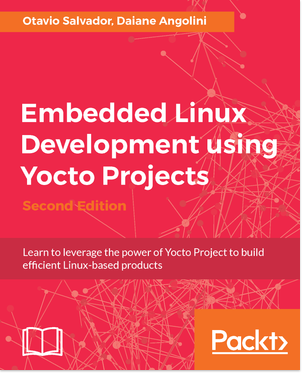
We are happy to announce the release of the 2nd edition of Embedded Linux Development with Yocto Project book. It has been updated to reflect the changes in the Yocto Project since it has been published in 2014 and it is now fully up to date to Yocto Project 2.4 release (codename Rocko).
If you are an embedded systems enthusiast and willing to learn about the compelling features offered by the Yocto Project, then this is an essential book in your library. With prior experience in the embedded Linux domain, you can make the most of this book to efficiently create custom Linux-based systems.
Read on
Since our first post about the Golang improvements being done for the Yocto Project 2.4 release we did another batch of improvements and tests on OpenEmbedded-Core. There are few worth mentioning features when we compare the feature set of initial Golang support, landed in Yocto Project 2.3, and the upcoming release after these changes:
- Upgrade to latest Go toolchain - Golang 1.9;
- Share runtime libraries to save storage space - critical for embedded systems;
- Parallel build of modules - greatly speed Go package and libraries packaging;
- SDK support - allowing for Yocto Project to generate cross-compilers for use targeting the embedded system specific requirements;
- Availability of Go dep tool which is likely to become the official dependency tracking tool for Go in Golang 1.10 release.
Read on
We have been using the Golang here at O.S. Systems for multiple projects, especially our UpdateHub project which is on heavy development. Because of this work we have identified a few areas where the Golang support could be improved on Yocto Project, mainly:
- Multiple layers for providing support for Golang, like oe-meta-go, meta-golang, meta-virtualization and others;
- Different levels of quality of integration of Golang on those layers;
- Lack of SDK support on the OpenEmbedded-Core current integration.
Read on
 The Yocto Project is an open source collaboration project that provides templates, tools, and methods to help you create custom Linux-based systems for embedded products regardless of the hardware architecture. It was founded in 2010 as a collaboration among many hardware manufacturers, open-source operating systems vendors, and electronics companies to bring some order to the chaos of embedded O.S. Linux development.
Read on
The 3.10.17-1.0.2 i.MX6 BSP update has been merged into FSL Community BSP 1.7 release. Everyone using the Dizzy branch will receive those updates and it should be harmless.
This update includes several fixes on the graphics stack and improves robustness on kernel when dealing with high load.
We’re glad to announce the FSL Community BSP 1.7 (codename Dizzy); it has been a busy release cycle with some new boards support added. In total we now support 42 boards from several vendors.
Read on
Freescale has released an update to the 3.10.17-1.0 GA BSP. The release includes bugfixes and an important bugfix for the Vivante GPU support to fix a race condition and has been tagged as 3.10.17-1.0.1 accordingly to the official announcement done in the Freescale i.MX Community.
Read on
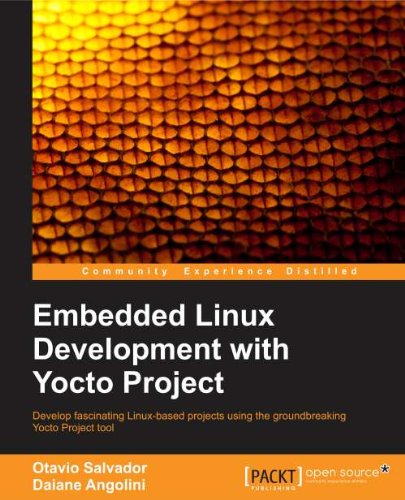 We are happy to announce the release of Embedded Linux Development with Yocto Project. A comprehensive one-year effort has led to this book, the first to specifically cover the Yocto Project use.
During the book’s development, technical reviewers from the Yocto Project community and from related industries provided a wider perspective of covered topics which are based on the Yocto Project 1.6 release (codename Daisy).
If you are an embedded systems enthusiast and willing to learn about the compelling features offered by the Yocto Project, then this is an essential book in your library. With prior experience in the embedded Linux domain, you can make the most of this book to efficiently create custom Linux-based systems.
Read on
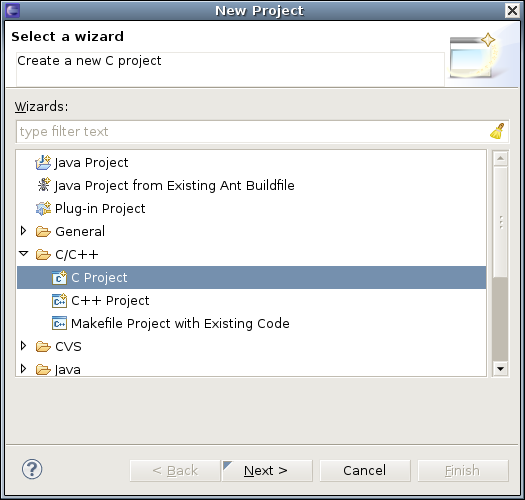
Assuming you’ve configured your environment correctly (you’ve installed eclipse, its plugins, the toolchain and the sysroot on the development machine; on the target machine booted the filesystem successfully), creating an application is as easy as the following steps:
Open Eclipse, on the menubar, click on “File” -> “New” -> “Project…”;
select “C Project”, click on “Next”;
Read on
The 1.5 release of the FSL Community BSP had 30 contributors, from 8 companies, which were able to provide support for 34 boards from different vendors and is based on Yocto 1.5 release (Dora branch).
The BSP support many different SoC and currently support boards of i.MX23, i.MX28, i.MX31, i.MX35, i.MX51, i.MX53, i.MX6SL, i.MX6S, i.MX6DL, i.MX6Q and Vybrid SoC types.
Read on
 Since our
  We have been using the